The microcredential market has become a flea market. Anyone can mint a badge. Anyone can sell a certificate. Watch a video, click through a quiz, collect a shiny PNG, and suddenly you are “certified.”
Certified in what? At what level? Against what standard?
This is talent theater, and the labor market is paying full price for the ticket. Employers drown in credentials that signal attendance rather than ability. Learners stack badges that evaporate the moment someone asks them to actually do the work.
The whole thing runs on optimism, and optimism is not evidence.
Here is the part most providers will not admit. The problem was never the microcredential. The problem is that we let “completion” cosplay as “capability.” A course completion is not knowledge. An exam pass is not proficiency. Neither one is competence. Those are different claims, and almost nobody is forced to prove which one they are making.
The fix is not one framework. It is structure. Any credential anchored to a real body of knowledge can carry meaning. Durable skills frameworks. Sector competency models. Technical bodies of knowledge. Professional standards.
If it has a defined structure and levels, it can be mapped, assessed, and evidenced. If it floats free of all that, it is decoration.
This is what SkillsTX actually does. SkillsTX Talent eXperience is the evidence-based system of record that brings frameworks to life. It takes a body of knowledge, operationalizes it, and turns scattered claims into a visible, comparable picture of real capability.
SFIA is where we have proven this at scale, and it remains the global gold standard language for digital skills, governed by the SFIA Foundation. But the engine is not loyal to a single framework. Durable skills, role-based models, and domain-specific BoKs can all run on it.
Then you protect the claim. With our recent acquisition of Credentials Cloud, we’re continuing to build the trust and verification layer that connects learning outcomes and real-world evidence into recognition that employers can rely on.
This is not “more badges.” It is governance for what a badge dares to claim. APMG International digital badges for all 147 SFIA skills at 7 levels of autonomy, and the differentiation between knowledge, proficiency, and competence sets the bar for credible recognition.
The only way an individual, or even an AI agent, gets a badge is through objective, evidence-based, and science-backed criteria.
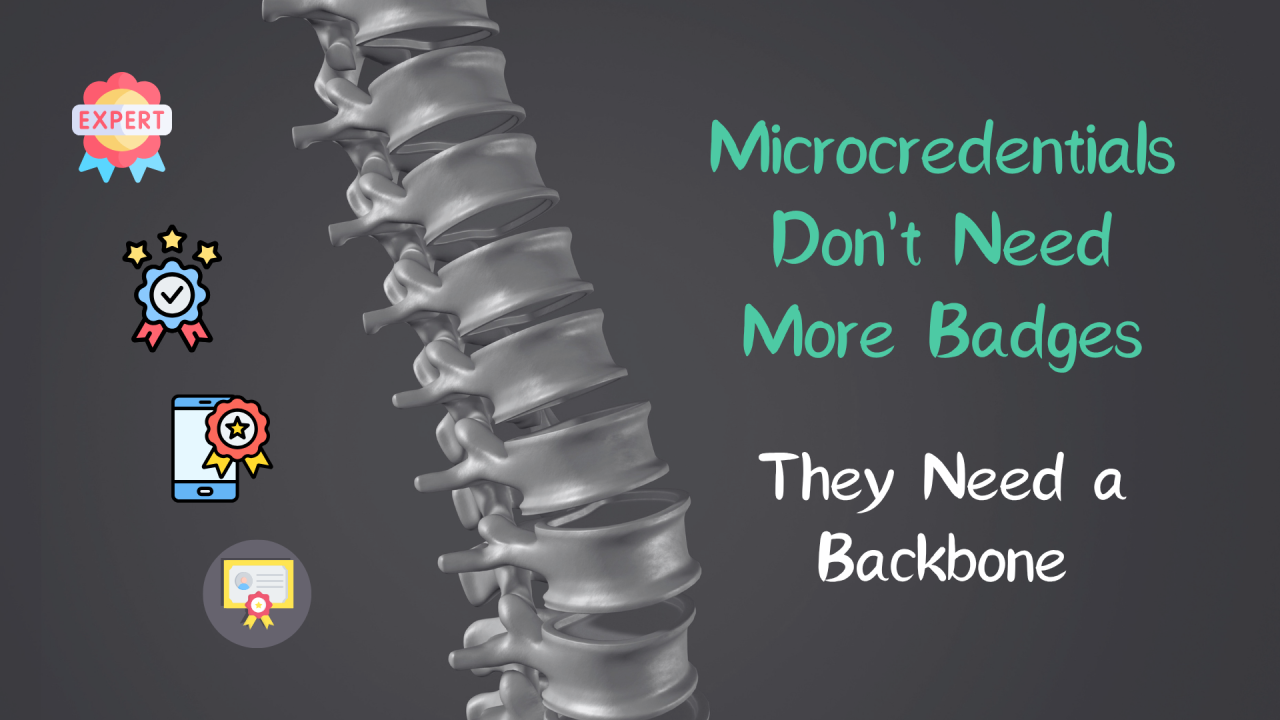
So enough with the participation economy. Microcredentials do not need more hype. They need a backbone. Give them a real framework, operationalize it, evidence it, and verify it.
Build on evidence, or get exposed by it. The market is done rewarding theater.
#EvidenceBasedCredentials #Microcredentialing #SFIA #DitchTheResume #OwnYourSkills #DurableSkills #DigitalSkills #FutureOfWork
