
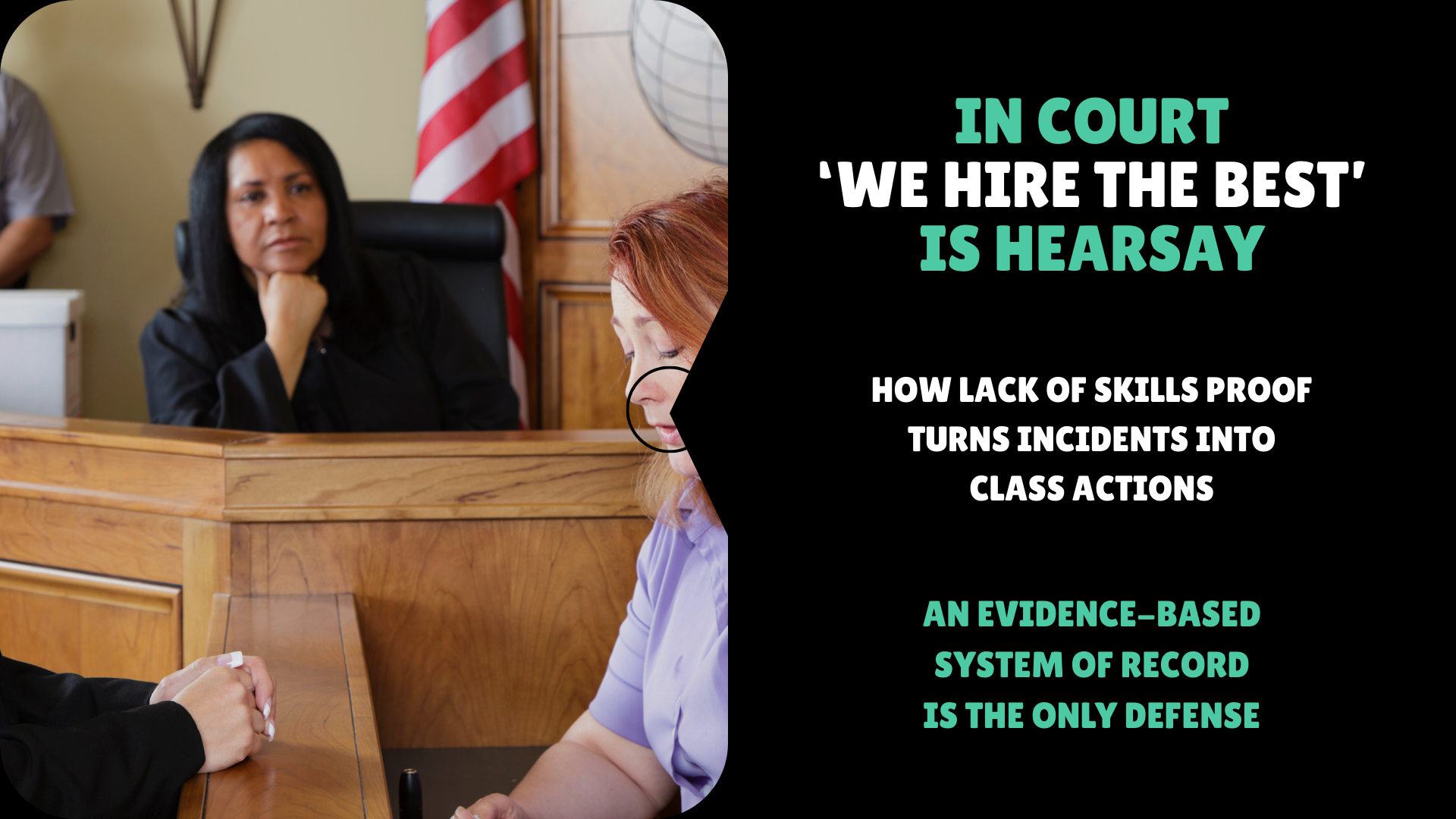
Millions of patient medical records land on the dark web. Not statistics. Lives. Names, diagnoses, histories that were supposed to stay inside exam rooms now sit in breach forums and news cycles.
Within days, lawsuits multiply. Class actions. Regulatory notices. Patient groups organize across the network and protest outside flagship hospitals. Operations continue, but every meeting now has a legal shadow.
On paper, this health system was a benchmark. Fully staffed security and engineering teams. Strong budgets. Clean vendor governance. Leadership is invited to global stages to talk about digital maturity and resilience. This was the place others pointed to and said, “They have it together.”
The early investigation supports that narrative. Tools were implemented. Policies existed. Assessments had passed. Nothing looks outrageously reckless.
Then the review moves from systems to people.
“In this breached environment,” an investigator asks,
“How did you satisfy yourselves that the individuals responsible for these systems had the skills required for those duties?”
Executives respond without hesitation. They speak about rigorous hiring, top résumés, respected managers, generous training, and industry certifications. They reference past incidents handled well. The belief in their teams is absolute.
The investigator narrows the focus.
“For the roles tied to this breach, where did you define the specific skills and proficiency levels required, and where did you record that each person met them?”
Silence does not hit immediately. It leaks in slowly as answers drift toward spreadsheets, managerial judgment, performance reviews, and vague terms like ‘expert‘ and ‘strong performer’.
Every leader had a story. No one had a shared, objective model that turns those amazing stories into ‘evidence‘.
The lack of evidence was the root cause. Not the exploit. The absence of defensible proof that the right people, with the right skills, really owned the most critical systems.
Now imagine the same organization with SFIA (Skills Framework for the Information Age) and the SkillsTX Talent eXperience platform in place.
Every digital, data, and cyber role is mapped to a common, non-proprietary skills language. One hundred forty-seven SFIA skills and six SFIA categories define what good looks like.
SkillsTX captures assessments, delivers comprehensive, evidence-based analytics, and APMG International-validated digital badges that differentiate between knowledge, proficiency, and/or competence at each level.
Nobody can say if this specific breach wouldn’t have occurred because talent and skill gaps around those systems were visible years earlier. The wrong person would never be held responsible for work they were not yet fully competent to perform.
Even if it does happen again, the story in the root cause review room is different.
When investigators and lawyers ask how the organization knew its people were capable, the CISO opens SkillsTX and shows time-stamped, role-mapped, independently validated ‘evidence‘.
Not perfect. Defendable.
Audit your talent evidence today to ensure your organization is prepared for tomorrow’s challenges. Taking action now can protect your organization and turn this vulnerable moment into an opportunity for growth and resilience.
Below are five questions to get the conversation started in your organization.
- If a regulator or plaintiff attorney walked in tomorrow and asked for hard evidence of competence, what could you actually put on the table?
- Where in your organization are you still relying on gut feel, job titles, and vendor certs instead of verifiable skills data?
- How would your last major incident read if the root cause section had to include a clear, evidence-based map of who knew what and who could do what?
- What would it take for your board to treat skills evidence with the same seriousness as financial controls and cyber tooling?
- If SFIA and a platform like SkillsTX had been in place three years ago, what lawsuit, breach, or audit finding might not exist today?
