
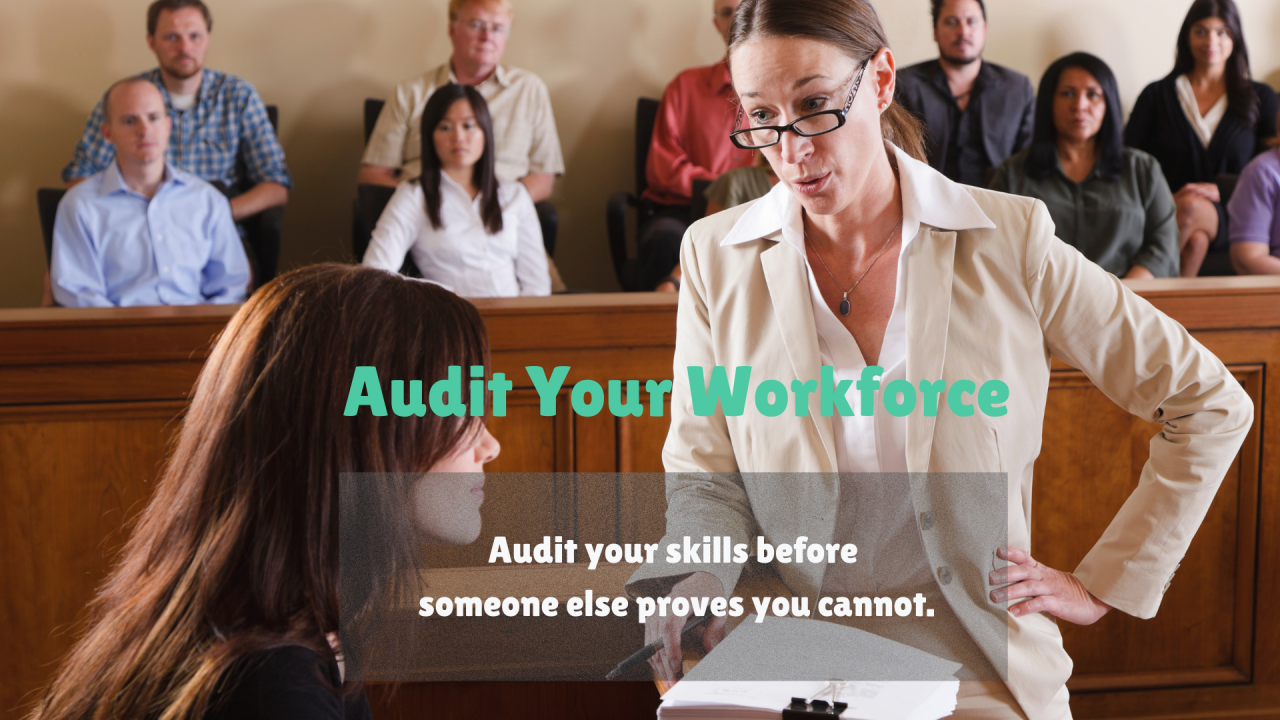
Picture the room after a major cyber, data, or privacy breach.
The regulator is asking questions. The board is nervous. Outside counsel is present. Someone from risk says the organization had the right controls, policies, and people in place.
Then comes the question that should terrify everyone:
How do you know those people were actually capable of doing the work?
Most organizations believe they can answer.
They will point to training records, certifications, job descriptions, annual reviews, self-assessments, manager approvals, and a spreadsheet showing everyone was “competent.” But none of that shows who reviewed actual work, what standard they used, or whether the skill held under real conditions.
It looks convincing until someone who does not care about the internal process starts pulling on the thread.
A plaintiff’s attorney does not need to understand your entire operating model. They only need to expose the gap between what you claimed and what you could prove.
The employee said they had the skill. Their manager agreed. The manager might also be the employee’s brother, friend, delivery lead, or the person trying to submit a bid before Friday. The approval might have been a genuine judgment. It might also have been the final box to check for a lucrative project. Either way, the question remains: what evidence supports the approval?
- What work product was reviewed?
- What standard was used?
- At what level was the skill required?
- Who independently verified it?
- When was it last reassessed?
- What changed after the person moved roles?
That is the moment most workforce assurance collapses.
Not because organizations have no records. They have mountains of records. The problem is that the records often prove participation, completion, tenure, or internal approval. They do not prove capability. They do not show the work reviewed, the standard applied, or whether the person could perform under real conditions.
- A course receipt proves someone attended training.
- A certification proves they passed a defined assessment at a point in time.
- A job title proves where they sat in the organization.
- A manager’s sign-off proves someone clicked ” Approve”.
None of those alone proves that the person could perform the critical work under real conditions.
Yet security, audit, compliance, and assurance professionals routinely accept these proxies while scrutinizing almost every other control in the enterprise. That is the real exposure.
Do we have the right people with the right skills in the right roles, and can we prove it?
Most organizations will answer yes. Many will insist they have the evidence.
Even the most bargain-bin, ambulance-chasing attorney could turn that confidence into an admission during a single deposition if the evidentiary trail is thin.
At SkillsTX, we believe workforce capability should be auditable. SFIA (the Skills Framework for the Information Age) and the SFIA Foundation provide a common language for defining skills, levels, responsibilities, and context. SkillsTX technology captures evidence, validates capability, exposes gaps, and maintains a defensible inventory over time with the help of some new AI agents that make the process less “assessment” and more coaching and evidence verification.
We are not hoping for breaches, lawsuits, or regulatory failures. We are trying to prevent organizations from discovering too late that their workforce assurance was built on polished paperwork and assumptions.
Because after the incident, “we thought they could do it” will not sound careful. It will sound indefensible.
Audit the skills. Show the receipts. Prove it before someone else proves you could not.
