August 27, 2026
You may have noticed something different at the top of this newsletter. After much thought, I have renamed it to Skills Forensics™. The new name reflects a shift in focus: not just talking about skills, but investigating the real evidence behind them. This is more than a title change; it marks a new way of looking at our professional capabilities.
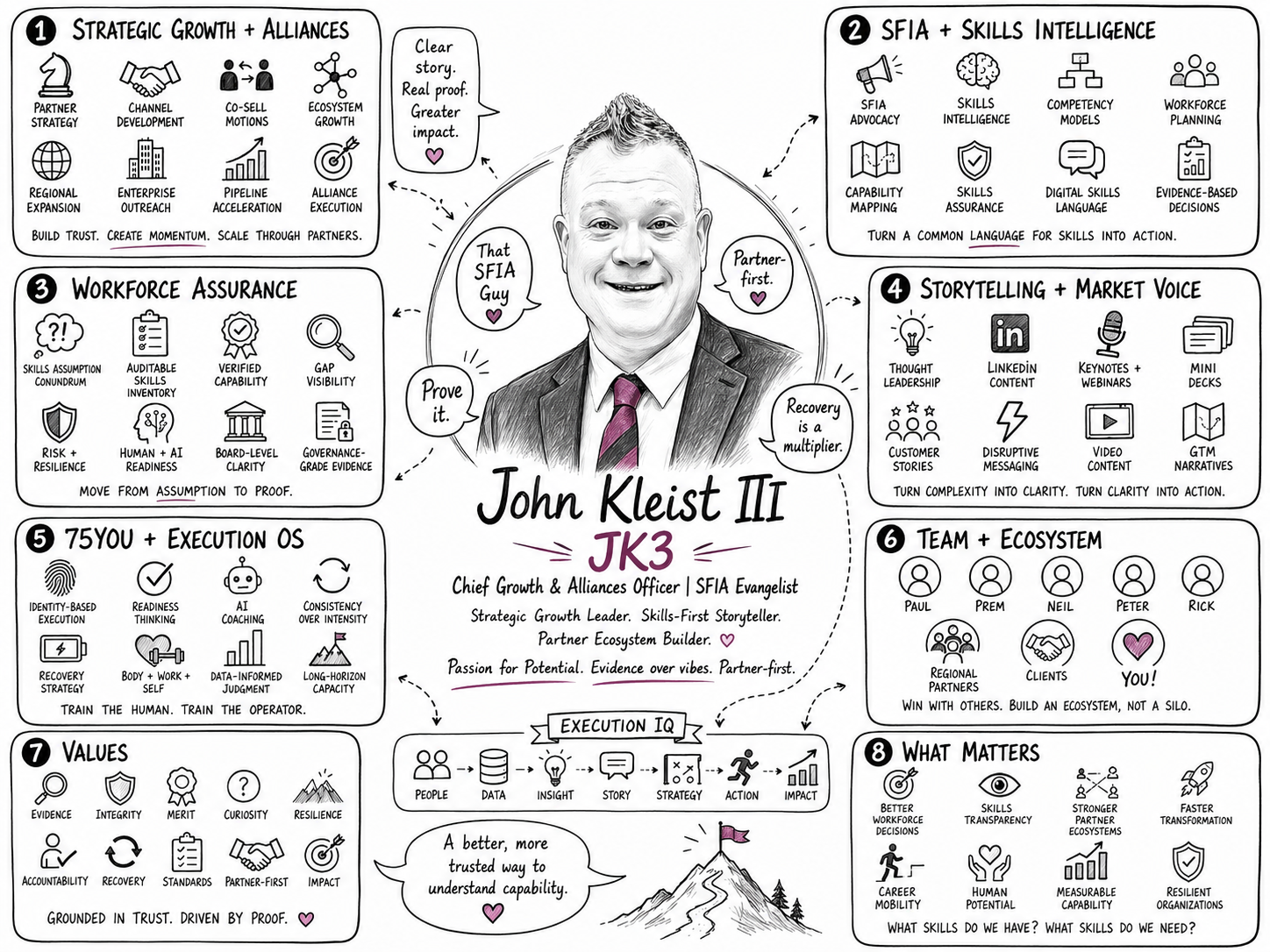
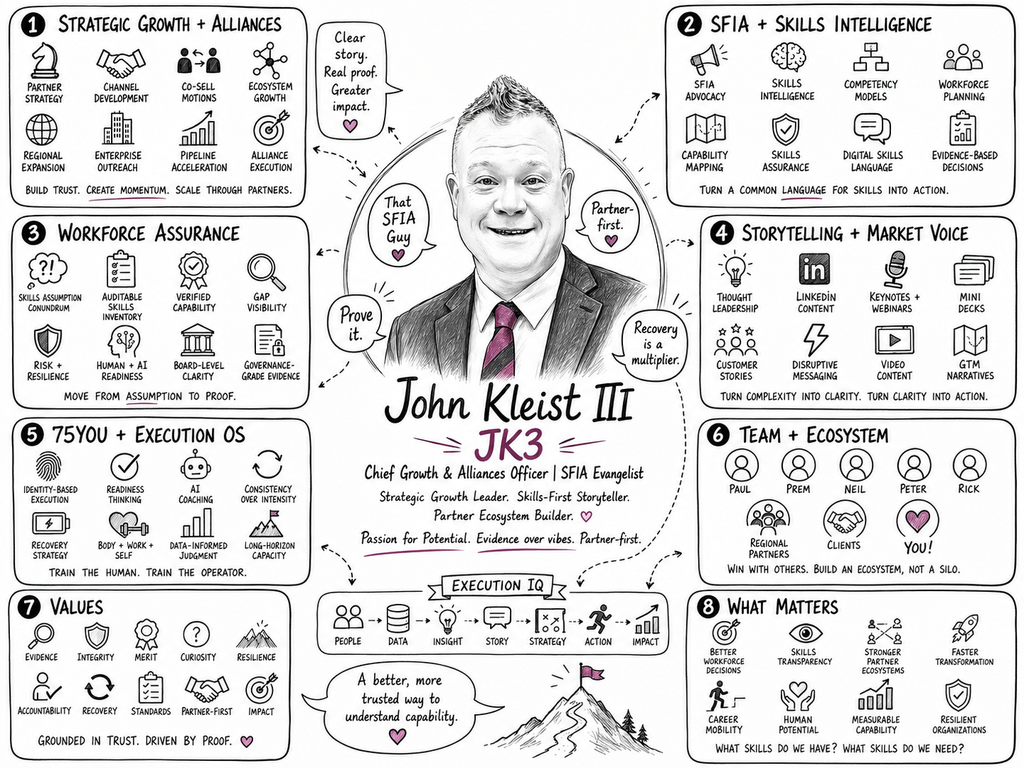
This week I tried something different. I asked my AI assistant, Chasm Sherpa, to map my professional capabilities; not from my résumé, not from my job title, but from the actual work it has seen me do over the past few years.
The result? Flattering. Strategic growth. Alliances. Storytelling. Workforce assurance. SFIA. Digital marketing. Content authoring. Innovation. Honestly, it looked more accurate than any job description or CV I have ever seen.
Then I asked the question that mattered.
Can you prove it?
That changed the exercise completely.
Most people are already using AI to upgrade how they describe themselves. Feed it your résumé, and suddenly you are a strategic visionary, transformational leader, exceptional communicator, and innovative change agent, all before breakfast. The language gets fancier. The claims get bolder. The evidence? Usually unchanged.
We have it backward.
If you have spent the last year working with an AI assistant, it has seen more than your résumé ever could. It has watched how you think. It has helped you build strategies, create campaigns, challenge assumptions, solve problems, write content, and make decisions. That is a trail of evidence, not just a list of claims.
So perhaps the more interesting question is not, “What skills do I have?”
It is:
“What evidence have you actually seen that proves I can do this?”
That is where Skills Forensics™ begins.
Take digital marketing. I do not need an AI assistant telling me I am ‘good at digital marketing.’ That is almost meaningless. Show me the campaigns. Show me the audience decisions. Show me the content. Show me the channels I picked and why. Show me what happened, what I measured, what I changed, and whether it worked. Did I do it once, or have I done it consistently?
Now we are getting somewhere.
The same test can be applied to almost any professional skill. Stakeholder Relationship Management. Content Authoring. Innovation. Digital Mindset, Methods and Tools, Consulting, Selling, Digital Marketing. (A few of my top SFIA skills.)
The claim is easy. The evidence is harder.
Frameworks like SFIA make this even sharper. They force a harder question: At what level have you actually demonstrated the skill? Knowing is not applying. Applying under direction is not the same as working independently. Working independently is not the same as setting direction, advising others, or shaping strategy.
That distinction is where many career profiles fall apart.
We have spent decades building careers around proxies. Job titles. Years of experience. Degrees. Certifications. Self-reported skills. LinkedIn endorsements from people who may never have seen us perform the skill they are endorsing.
Skills Forensics asks for something more uncomfortable.
- Show me the work.
- Show me the decisions.
- Show me the complexity.
- Show me the autonomy.
- Show me the outcome.
- Show me who else could validate it.
And, just as importantly, show me where the evidence is weak.
AI should not be the assessor. That would replace human self-inflation with machine-assisted self-inflation. Its role is much more valuable than that. AI can become the investigator, the evidence clerk, and the pattern finder. It can help reconstruct the case you have been building through years of actual work.
That may eventually change how we think about professional identity.
- Your résumé tells people where you have been.
- Your skills profile tells people what you believe you can do.
- Your evidence tells people what you can prove.
The capability map I created this week is useful, but it proves nothing. Every meaningful skill on it should eventually have an evidence file sitting behind it. Real work. Real decisions. Real outcomes. Real validation.
Maybe the future of career ownership is not a better résumé.
Maybe it is a continuously maintained body of evidence that answers a much harder question:
What can you prove you know how to do?
That is Skills Forensics™.
This article was originally authored by John Kleist III and is republished by SkillsTX with permission. All original authorship, analysis, concepts, and commentary are credited to John Kleist III.
